A National Vote, Built by Last Year’s Laureate
Plamen Petrov · CEO, OpenKBS · November 8, 2026
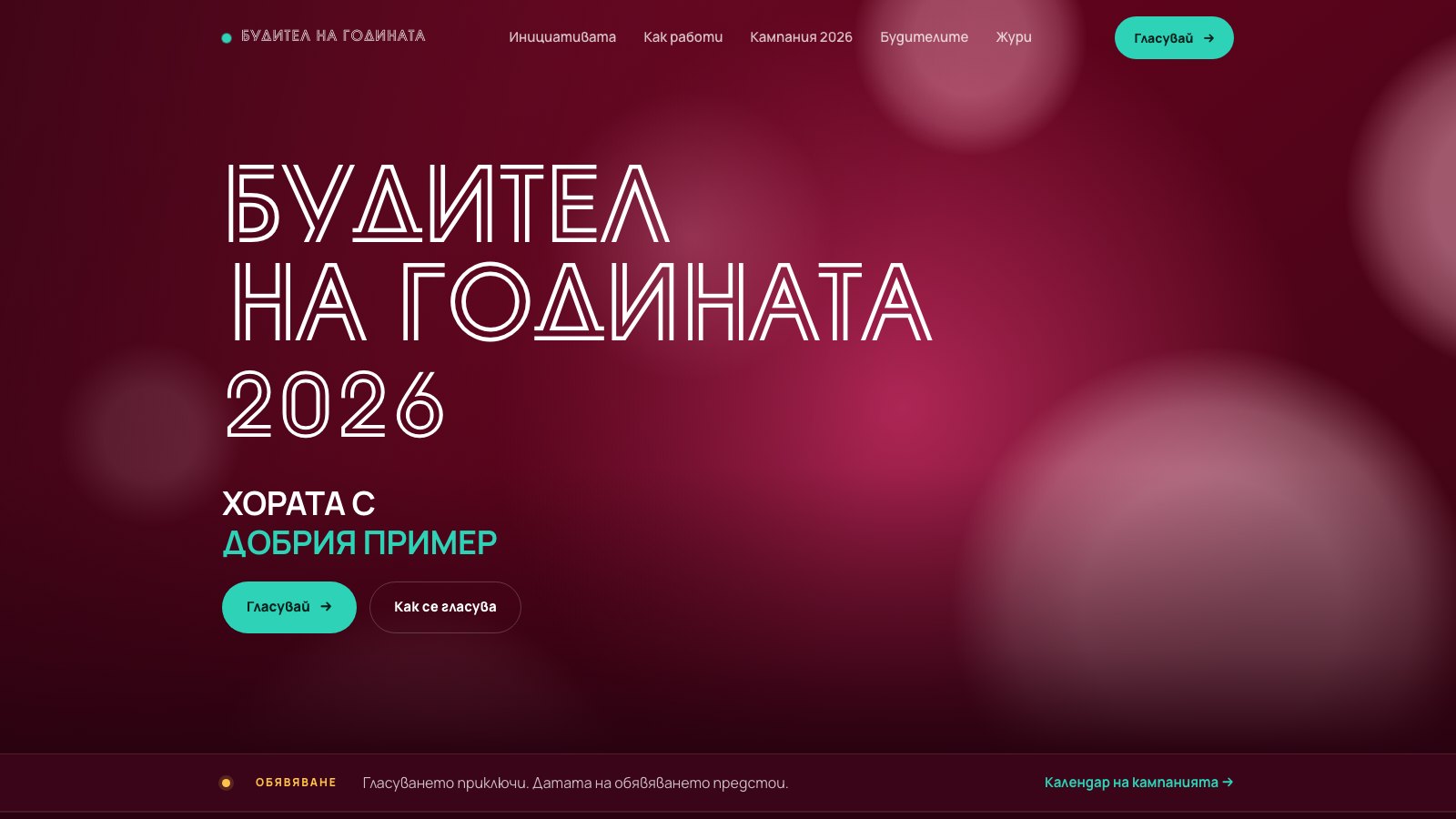
On 7 November 2026, Bulgarian National Radio named historian Dr. Aleksandar Stoyanov “Buditel na Godinata” (Enlightener of the Year) for 2026. Thousands of people had voted for the ten finalists over the preceding weeks. The vote ran on buditelnagodinata.bg, a site built on OpenKBS.
The initiative was created in 2014 by journalist Iva Doychinova and has been organised by Bulgarian National Radio since 2018. Citizens nominate people who change others’ lives by example; an independent jury picks ten finalists; their stories are told in video portraits; the public votes. The 2026 motto was “People are the good example.”
The person who built the 2026 site and vote knows the award from the inside. Martin Atanasov received it in 2025. In 2026, now part of the organising team, he took on a job that is usually handed to an agency with a budget and a deadline: make the public vote honest, simple and resistant to bots. He did it in OpenKBS AI Studio, alone, in a few weeks.
“I wanted the vote to be simple for people and impenetrable for bots. With OpenKBS I built it myself, the site, the database, the API and an agent that watches suspicious votes, without putting a team together.”
— Martin Atanasov
The rules, stated in public
The voting page spells out how the vote works before anyone casts one:
- One person, one vote. A name, an email address and a consent box that is not pre-ticked. Without consent, the vote does not go through.
- No confirmation email. The vote is recorded immediately. Nothing to click, nothing lost in a spam folder.
- Results sealed until the ceremony. No running totals, no leader, for anyone. The ten finalists are shown in a different random order on every page load.
- Personal data deleted after the announcement. Name, email and technical data are kept only until the result is announced, so that the vote can be checked, and then erased. What remains is the vote itself: who was voted for and when, unlinked from the voter.
Under the hood
The site uses most of what OpenKBS offers in one project:
- a static site on a global CDN, with the finalists’ video portraits loading only when a visitor asks for them;
- a serverless API for the vote, with a device fingerprint and a random browser identifier to recognise a repeat vote from the same device;
- a Postgres database for the votes;
- a second serverless function that runs every 30 minutes as an AI agent: it reviews the day’s votes for invented names, repeated patterns and clusters from one place, and flags them. Whether a flagged vote is excluded is decided by a person, never by the model. The site says so, in the privacy notice, in plain Bulgarian.
Halfway through the vote the project’s database was moved from one Postgres engine to another, with every table verified row by row. The vote did not notice.
Why we tell this story
Martin is not a software company. He is a person with a cause who, over the past year, has built three public platforms on OpenKBS: Diagnoza Bulgaria, which made the reported spending of 180 hospitals comparable; Glas za Sport, a national consultation on sports facilities that drew 16,000 votes in ten days; and now the vote for Buditel na Godinata.
His example travels. A social worker in Innsbruck read about Diagnoza Bulgaria, wrote to us with an idea of her own, and built JobRoom Tirol, which has just won the World Summit Awards Austria 2026.
For us this is the point of vibe coding: not a demo on a screen, but a national vote that thousands of people trusted, built by the person who understood the cause rather than by an agency hired to guess at it.
Congratulations to Dr. Stoyanov and to all ten finalists. People are the good example.